

I once delivered an undergraduate lecture on the history of the development of psychological therapies. I dressed up as a witch (not joking, you can find photographic proof here) as a way to remind students just now far we have gone from the ignorant time when mental health was understood in the context of witchcraft or the like. Thankfully nowadays, at least in the UK, we have a relatively strong respect for an evidence-based approach, by which treatment effectiveness is subjected to rigorous scientific scrutiny before implementation in routine clinical practice. Many people may not fully appreciate just how much intellectual dedication and financial investment are required to deliver a robust clinical trial. It is in this context that I was overjoyed to see how much positive media coverage a recent publication in the Lancet has attracted. Read more…
At Research the Headlines, our aim is to address how research is reported in the media. We want to ensure that people of all ages are better equipped to understand and evaluate this information. We were recently awarded funding from the British Academy to launch “Rewrite the Headlines” this autumn, a competition to engage young people with research and the media. Read more…

I was prompted to write this piece in response to an article that appeared on the Independent last week under the title: Left-handed people have same genetic code abnormality as those with situs inversus. In addition to the inaccurate headlines, the article contains other mistakes and inaccuracies. Read more…

On Saturday April 25, 2015, just before noon local time, a magnitude 7.8 earthquake violently shook Katmandu and surrounding regions of central Nepal. Like nearly every earthquake that has occurred throughout the history of humankind, this event was not predicted, despite extensive scrutiny of the Himalaya region by seismologists over the course of many decades. The distressing scenes of death, human suffering and widespread devastation that for the last few days have saturated our televisions, radios, newspapers and the Internet are also accompanied by the inevitable question of why – why here? why now? why didn’t we know it was coming? As was the case for previous devastating earthquakes in recent memory – the Tohoku earthquake in 2011, the Haiti earthquake in 2010, the Sichuan Earthquake in 2008, the Sumatra earthquake in 2004 – as the death toll continues its inexorable rise from 10s to 100s to 1000s and beyond, the experts begin to come out of the woodwork to provide a scientific perspective on the cause of the unfolding humanitarian disaster. Read more…

This week, the Telegraph reported on a study purporting to demonstrate that “Wealthier children have bigger brains”. In a surprise twist, the headline is not the most sensationalist part of the article, with the first sentence stating “Richer pupils achieve higher academic grades because their brains are different, according to research”. There is a fairly obvious overgeneralization on the direction of causality here (this type of study cannot distinguish whether bigger brains leads to higher grades brains or vice versa), but that’s a trap that the media routinely fall into. Read more…
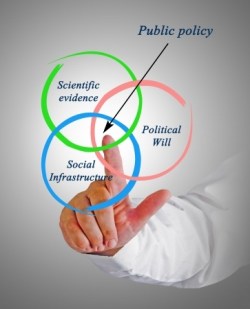
You are more than likely aware of the impending UK General Election, when, on May 7th 2015, we will decide who will represent us in the House of Commons and who will ultimately govern the UK. Our MPs vote and legislate on all kinds of issues, but how do they come to their decisions? Does evidence overrule morality, public opinion and personal beliefs? If so, how reliable and useful is this evidence? To look into this, Sense About Science have commissioned a survey, canvassing information from 104 Labour and Conservative MPs who served from 2010-2015 on what influences their choices when setting social policy. Read more…
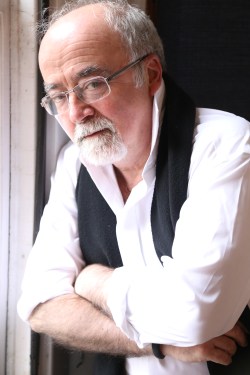
James Coyne is Emeritus Professor of Psychology in Psychiatry at the University of Pennsylvania. He is also Director of Behavioral Oncology at the Abramson Cancer Centre and Senior Fellow at the Leonard Davis Institute of Health Economics. His main area of interest is health psychology and depression. Professor Coyne’s work in psychology and psychiatry is consistently cited for its impact. Jim is also an active blogger, confronting editorial practices and media science reports that favour sensationalism at the expense of scientific content. Jim is currently visiting Scotland as a 2015 Carnegie Centenary Visiting Professor at the University of Stirling. Read more…
Do you have a particular news story that you’ve seen in the popular (or not so popular) media that you’d like covered by Research the Headlines? If so, please get in touch! We’re especially interested in hearing how the news media outside of the UK covers research-based stories.
Also, if you’re a researcher and your work has been featured in the media, we’d love to get your perspective on the experience (good or bad!). Give us your insight into the process, from drafting the press release with your university press office to your interaction with the media, and your thoughts on the finished articles.
Let us know what your story would be by email (A.J.Gow@hw.ac.uk), or contact us via Twitter or Facebook.

A research study that examined the effects of the type of praise parents give to children on their developing personalities has received considerable attention in the media. With headlines like “too much praise can turn your kids into narcisstic jerks, study finds” and “parents who over-praise their kids are breeding narcissists“, it is no wonder parents might begin to think about the role of praise in parenting practices! But what did the research actually show? Read more…

Last month saw the Stamina case come (eventually) to an end; Davide Vannoni, the inventor of the Stamina method (more on that below), reached a plea of one year and ten months for fraud. The Stamina method was advertised as a miraculous cure, based on stem cells properties, to treat different types of serious and often currently untreatable diseases. The method is not supported by scientific evidence nor clinical trials, yet it was allowed to be given to patients in Italy. Perhaps this is not too surprising, given this is not the first time that Italian authorities have failed to listen to evidence. In the 1990s, Luigi Di Bella was allowed to give patients a cocktail of molecules such as somatostatin, together with vitamins, claiming it would treat any type of cancer. Read more…


 researchtheheadlines.org