
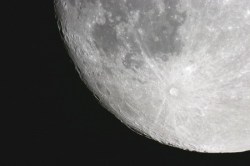
It’s not very often that I’m utterly gobsmacked when I read the day’s latest physics and astronomy’s preprint journal articles on the arXiv server. But today I was, thanks to one rather unassuming paper, which hasn’t quite made a splash on the news networks yet. Read more…
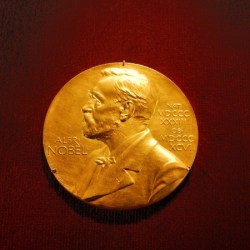
The Nobel Prize announcements are in full swing. The prizes are awarded in the name of Alfred Nobel to those who bestow ‘the greatest benefit on mankind’. The prizes in physics, chemistry, literature, peace and physiology or medicine always create excitement, and no more so than in the scientific community – they are somewhere between the Oscars and the World Cup of Science. Read more…
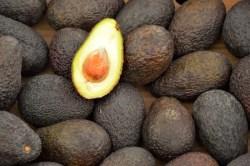
We frequently see reports in the news about super-foods. We also, perhaps just as regularly, see articles that question the merits of particular superfoods in relation to fat content. In the news this week, it was the turn of avocados to be questioned as to their superfood status. Why have the media questioned the value of these foods? Read more…

Rewrite the Headlines is a new competition aimed at encouraging undergraduate students to evaluate how the latest research is translated into headline news.
For the competition, entrants will prepare a short blog exploring a recent research finding which has been discussed in the media. The competition is open to students from universities across Scotland, and entries from all subject areas are encouraged. The aim is to allow students to showcase the skills they’ve developed during their undergraduate training in interpreting and evaluating research studies, and ensuring that these often complex findings are effectively communicated to different audiences. Read more…

Media coverage about young children’s use of technology such as iPads and television is as prevalent as ever. A survey published last week examining frequency of use of iPads and other devices in very young children seems to have spurned a range of different views from psychologists and other childhood experts. At Research the Headlines, we have repeatedly emphasised the importance of including independent expert opinions when discussing research; so, in the case of this coverage on toddlers use of iPads, have these experts helped to clarify research findings? Read more…

As we move towards the seasonal ‘Flu’ time of year, there have been several reports relating to our struggle to combat influenza (or Flu). Every year, new strains of Flu pop up in the population – this is due to the amazing and fascinating evolutionary biology of Flu. We are not the only natural host of the Influenza virus – it is what we refer to as a Zoonotic infection and circulates in a range of wild and domestic species such as chickens, waterfowl and pigs (We call these ‘reservoirs’). It is this ability to move between different hosts that causes influenza viruses to evolve rapidly, picking up small changes called mutations that can aid their survival in new hosts. Coupled with this, influenza has segmented genome. Each of the eight segments of the genome encodes a separate protein (or two), and each segment is required for the virus to grow and reproduce itself. However, influenza can swap these segments with other strains of influenza quite readily. Interestingly, it is when strains of influenza are moving between reservoirs that they can acquire extra rapid ‘shifts’ in evolution. It is also possible for two strains to co-infect the same host simultaneously and swap entire genome segments – potentially gaining large evolutionary advances. It is these jumps that result in the emergence of new influenza strains. Two genome segments that are particularly important in influenza infection are those that encode the major surface proteins of the virus (Haemaglutanin [HA] and neuraminidase) and these regularly change to help influenza hide from the host immune system. It is these processes which often work in tandem that result in the new strains of Flu each season. Read more…

A colleague sent me an article in the Telegraph titled “Successful male leaders have wider faces than average man” to ask for my opinion. Other venues have reported similar stories: the Daily Mail reports it as, “As plain as the nose on your face: How strangers can tell if you are powerful, intelligent or even criminal just by a quick glance at your facial features“
The first thing I always do when assessing an article about research is to look for the original source. Unlike many news articles, this one helpfully included the name and affiliation of the researcher. But after about half an hour of digging, I found that Marc Fetscherin has never conducted such a study. It seems that he is actually publicising the publication of his new book, CEO Branding, which claims to pull together research into faces and personality. I haven’t read this book, but I’m very familiar with research on social perceptions of faces, so I’m going to give a brief assessment of a few of the claims made in this article. Read more…

It’s autumn, but winter is fast approaching, so that means grim and terrifying headlines about severe weather systems arriving in the UK. You might remember me writing about this last year, when the Daily Express reported in November 2013 that the winter of 2013/14 would be “the worst in 100 years“. Predictions of Arctic blizzards were confronted with the reality of a warm, wet, stormy winter, with terrible flooding. Read more…

This week, we have witnessed alarmist headlines telling us scientists have discovered that Alzheimer’s can be transmitted from human to human. See, for example, Alzheimer’s disease may be infectious in The Independent, or Evidence for person-to-person transmission of Alzheimer in Scientific American, or Alzheimer’s could spread during surgery in The Guardian.
In less than 24 hours, however, we have seen a backtracking trend on this story, with most media outlets telling us not to worry and not to believe the headlines, and The Independent releasing a new article saying the previous headlines were misleading and could cause unnecessary concerns.
So what happened? Read more…

This article was written by Dr Annie Tindley.
There is a lot about land in the Scottish press at the moment, and no wonder. As part of the SNP’s legislative programme, a new Land Reform Bill, and a Community Empowerment Bill are currently under scrutiny at the Scottish Parliament and scheduled to pass into law in 2016. Read more…


 researchtheheadlines.org