

This week we were stunned in silence to hear that our friend and colleague, Marcos Vidal, had passed away. He has been described by his colleagues as the rising star of cancer research, and those of us who were fortunate enough to meet him and know him, know of his intellectual brilliance as well as beautiful personality. He was a true joy to have around; full of energy, enthusiasm and infectious positive attitude. My first encounter with Marcos was through this blog, Research the Headlines. He emailed me initially as he wanted to talk about our overlap in research projects and possible collaborations. He said he looked at my profile and thought we could do some interesting work. We finally met, not at the Royal Society of Edinburgh, but at a cancer research conference organised at the Beatson Institute. When we talked, I felt like we had been friends for a long time. He was very proud of his equally successful wife and we had a nice conversation about parenthood. Marcos was one of those people that you immediately gel with and can see why he was so successful. Great ideas, great mind and a collaborative and kind person!
Originally from Argentina, he did his postdoctoral fellowship in the States and obtained his independent group leader position at the Beatson Institute for Cancer Research in 2009. He published papers in top journals including most recently Nature, EMBO Journal, Current Biology. His brilliance was quite obviously recognised by others as well; he was an elected member of the Royal Society of Edinburgh Young Academy of Scotland, and recently promoted to a full Professor at the Beatson Institute. His potential to achieve more amazing things leaves us sad and empty. Our condolences go out to his family, who must be heartbroken.
As for us, we will always remember him fondly and even though he leaves us at such a young age, he has touched the hearts of many; with this in mind, we look back at some of the posts that Marcos wrote for Research the Headlines and will always be grateful to have known him.
Mirela Delibegovic
Watching Bacteria Evolve
A cure for ALL cancers?
Does red meat cause cancer?

We regularly blog about how mental health conditions are discussed and portrayed in the media. Examples include depression, autism spectrum disorder (ASD), and Attention Deficit Hyperactivity Disorder (ADHD). We also blog about related issues such as when mental health conditions arise in pregnancy and the post-partum period and use of psychiatric medication in pregnancy. Looking more broadly at how mental health conditions are represented in television programmes (and the media coverage of that), it is clear that there has been an increase in coverage of mental health conditions on television over the last few years. This is a good thing in general terms for raising awareness, addressing stigma and helping to normalise mental health conditions. However, the success of that depends on how programmes represent the mental health conditions concerned. Most importantly, are the producers and script writers ‘researching the headlines’ to move beyond popular misconceptions and find out a detailed accurate account of these conditions before they represent them in characters? Read more…
It’s been another busy year for us at Research the Headlines. We’ve been casting our net wide this year, addressing some of the biggest news stories out there, from the refugee crisis to the Nepal Earthquake. We asked tough questions of how people with depression are treated by the media in the wake of the Germanwings crash, and looked at how politicians incorporate research into policy decisions. We scrutinised the big headlines and the small: is Google ruining our memories? Are tablets bad for child development? Should you throw out your skinny jeans? Read more…

Autism spectrum disorder (ASD), and the factors that may cause it, are frequently discussed in the news. There have been reports in the media over the last week suggesting that maternal use of antidepressants during pregnancy ‘doubles the risk of autism’. The coverage generated highlights the need to follow our top tip of ‘Don’t stop at the headline’. What does ‘doubling’ the risk actually mean here, and are there alternative explanations that could account for any increased risk? Read more…
Hold the front page: Closing date extended in “Rewrite the Headlines” student competition.
Enter now for your chance to win a Microsoft Surface Pro 4!
Do you ever read about how “New research suggests…”, and wonder if that’s really true?
In our Rewrite the Headlines competition, we aim to engage young people with how research is discussed in the media, and to encourage them to develop a critical approach to this (not just in questioning the headlines, but assessing the research behind the stories too).
The deadline for our student competition has just been extended to 11 January 2016, so there’s still time to enter. If you’re a student, you’ll be developing a whole range of skills to interrogate sources of new information. We want you to put those skills to use in our competition. Please do also share the details of the competition as widely as you can throughout your networks.
To enter, students will take a media story discussing some new research, and write a blog showing how accurately the media has represented the study (or not). The best entry will win a new Microsoft Surface Pro 4.
Full details about how to enter are available on the competition website: https://researchtheheadlines.org/rewritetheheadlines/undergraduate-competition/. The closing date is 11 January 2016.
The relationship between research and the media can be a tricky one. One minute you are in your driving simulator laboratory running experiments on vehicle feedback, the next thing you know it’s a headline about “silent killer cars”. You run a study funded by Transport Scotland into driver behaviour at roadworks, the handle of the media mangle is cranked, and the next minute an angry caller is phoning the Vice Chancellor wanting you sacked. This was followed a couple of days later by a mystery caller who had seen my photo in the Dundee Courier and just wanted to say how handsome I was (I know, I know, it was an out of date soft focus photo!). Surely there must be a better way than this? I suppose if you can’t beat ‘em, join ‘em, and let’s be honest, academic life isn’t all about ivory towers and insular little journal articles read by three people. My job, basically, is to do cool research and tell people about it. Maybe the media could help? Read more…
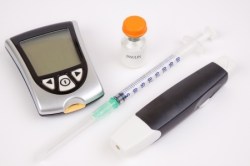
Statistics from Diabetes UK reveal that in the UK alone, more than 1 in 17 people have diabetes whether it is diagnosed or undiagnosed. In 2013, 3.2 million people in the UK had diabetes and it is estimated that the number will rise to 5 million by 2025. By the year 2040, there will be 640 million across the world living with the condition. Read more…

Widely recognised as one of the biggest threats to humankind, antimicrobial resistant infections presented further cause for concern recently. Antimicrobial resistant infections are infections that are no longer treatable with one or more drugs. Commonly thought of as ‘antibiotic resistance’, the problem is much broader and extends across all kinds of microbes such as bacteria, fungi, parasites and viruses (hence antimicrobial is a more suitable term). Recently, the journal, Lancet Infectious Diseases, published a paper that reported the emergence of a new kind of antimicrobial resistance mechanism to one of our last lines of defence against Gram-negative bacteria. Bacteria can be classified on the composition of their cell wall, either as Gram-positive or Gram-negative, following the work of a Danish physician Hans Christian Gram, who showed bacterial cells take up stains differently depending on the presence of a second membrane that helps protect their cell wall. It is the cell wall that has traditionally offered our best target for producing drugs to kill bacteria and is the target of some of our most important antimicrobial drugs such as penicillins, cephalosporins and carbapenems. By blocking the growth of the bacterial cell wall, we can stop the growth of the bacteria and so kill them. Read more…

In the past few years, there’s been increasing interest in understanding how knowing more than one language might protect our thinking skills against the ageing process. We reported on one of those studies a couple of years ago, “Can learning a second language delay dementia?”, and new research from the same team suggests that knowing more than one language may also aid recovery after a stroke. The findings were widely reported, for example on BBC News “Bilingual skills enhance stroke recovery, study finds”, and in the Telegraph “Bilingual people twice as likely to recover from a stroke”. So, let’s take a closer look at the research behind those headlines. Read more…

The findings of a systematic review of the effects of a commonly prescribed stimulant medication, methylphenidate, which you may know better as Ritalin, for children with ADHD received attention from the media with coverage that can best be described as ‘the good, the bad, and the ugly’. The review reported improvements in teacher rated ADHD symptoms and parent reported quality of life following medication use. Medication use was not associated with an increase in serious life threatening harmful events but was associated with an increased risk of less serious side effects such as sleep problems and reduced appetite. The reviewers used the ‘gold-standard’ Cochrane review method and provided a plain language summary of the findings. With such well-defined findings, why did the media coverage vary so much? Read more…


