
Over the first few weeks of February, we’re showcasing the top entries in both the school and undergraduate categories of our Rewrite the Headlines competition (full list of winners here). We’re now onto the special undergraduate subject prizes, with Dalia Sara Gala at the University of Glasgow winning the History prize, sponsored by the Scottish History Society. Read more…

Over the first few weeks of February, we’re showcasing the top entries in both the school and undergraduate categories of our Rewrite the Headlines competition (full list of winners here). We’re now onto the special undergraduate subject prizes, with Sarah Keith at the University of Aberdeen winning the Social Science prize, sponsored by Palgrave Macmillan and the Social Research Association. Read more…
Over the first few weeks of February, we’re showcasing the top entries in both the school and undergraduate categories of our Rewrite the Headlines competition (full list of winners here). We continue with another of our commended undergraduate entries, from Ajay Shah at the University of St. Andrews. Read more…
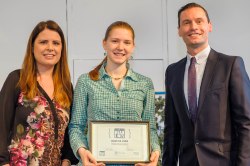
Over the first few weeks of February, we’re showcasing the top entries in both the school and undergraduate categories of our Rewrite the Headlines competition (full list of winners here). We continue with another of our commended undergraduate entries, from Emmi de Vries at the University of Glasgow. Read more…
Over the first few weeks of February, we’re showcasing the top entries in both the school and undergraduate categories of our Rewrite the Headlines competition (full list of winners here). We continue with another of our commended undergraduate entries, from Hannah Miller at the University of Glasgow. Read more…
At the end of January, we were delighted to announce the winners of Rewrite the Headlines, our national competition encouraging school children and students to explore how the latest research is turned into headline news. You can view the full list of winners here, and over the first few weeks of February we’ll be showcasing the top entries in both the school and undergraduate categories. We begin with one of the commended undergraduate entries, from Fraser Barker at the University of Strathclyde. Read more…

Primary school children and university students have been unpicking the evidence to find the real research behind news headlines.
Rewrite the Headlines was a national competition encouraging school children and students to explore how the latest research is turned into headline news. The winners were announced yesterday at an event hosted by Our Dynamic Earth with special guest Dr Bunhead.
Working with schools and universities throughout Scotland, the Rewrite the Headlines competition aimed to help young people better understand what research is, how it gets translated from specialised areas to popular media, and then how they might translate it back.
The initiative was run by the academics and researchers behind Research the Headlines, a blog which discusses research and the media, created by members of the Royal Society of Edinburgh Young Academy of Scotland. Read more…
We’re fast approaching the conclusion of our Rewrite the Headlines competition, our new initiative to engage schoolchildren and undergraduates with research and the media. The entries are all in, they’ve been collated and judged, and we have our winners. These will be announced on our blog on Friday 29th January, but if you want to hear all about the best entries sooner, you can join us at a special event on Thursday 28th January. Read more…

The New year 2016 has greeted us with a lot of headlines and news about the “diabetes time bomb”. The statistics are indeed staggering; it is reported that in the past 10 years alone, there has been a 65% increase in diabetes cases and there are over 4 million of diagnosed diabetics in the UK alone, according to the charity Diabetes UK. As someone who teaches at a university about diabetes, I know that this has to be the case and that it is also not the full story; there are so many of us who may be already at the pre-diabetic stage but we will just not know it. Type 1 diabetes detection is easier, as the body simply stops producing enough insulin (secreted from the beta cells of our pancreas) which normally keeps glucose (sugar) levels in our blood constant. The patients will often know that they’ve got it, as they unfortunately end up in a hospital. However, type 2 diabetes is the “silent killer”and may go undiagnosed for many years. It used to be referred to as the “old age” diabetes, as it would normally be diagnosed in people in their late 50’s onwards. This is probably because they hadn’t really visited the doctor before that with any serious problems, so it would just go unnoticed. By the time blood glucose levels are detected as being increased, there may have been a decade of a build-up, which if it had been detected earlier, could have been prevented. The major risk factor for development of type 2 diabetes is obesity and being overweight, which also leads to increased cardiovascular risk and heart disease. There are now reports of young children already displaying signs of development of type 2 diabetes. With an increase in our calorie intake and decrease in physical exercise we do, it is no wonder that the time bomb is ticking. Read more…
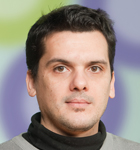
This week we were stunned in silence to hear that our friend and colleague, Marcos Vidal, had passed away. He has been described by his colleagues as the rising star of cancer research, and those of us who were fortunate enough to meet him and know him, know of his intellectual brilliance as well as beautiful personality. He was a true joy to have around; full of energy, enthusiasm and infectious positive attitude. My first encounter with Marcos was through this blog, Research the Headlines. He emailed me initially as he wanted to talk about our overlap in research projects and possible collaborations. He said he looked at my profile and thought we could do some interesting work. We finally met, not at the Royal Society of Edinburgh, but at a cancer research conference organised at the Beatson Institute. When we talked, I felt like we had been friends for a long time. He was very proud of his equally successful wife and we had a nice conversation about parenthood. Marcos was one of those people that you immediately gel with and can see why he was so successful. Great ideas, great mind and a collaborative and kind person!
Originally from Argentina, he did his postdoctoral fellowship in the States and obtained his independent group leader position at the Beatson Institute for Cancer Research in 2009. He published papers in top journals including most recently Nature, EMBO Journal, Current Biology. His brilliance was quite obviously recognised by others as well; he was an elected member of the Royal Society of Edinburgh Young Academy of Scotland, and recently promoted to a full Professor at the Beatson Institute. His potential to achieve more amazing things leaves us sad and empty. Our condolences go out to his family, who must be heartbroken.
As for us, we will always remember him fondly and even though he leaves us at such a young age, he has touched the hearts of many; with this in mind, we look back at some of the posts that Marcos wrote for Research the Headlines and will always be grateful to have known him.
Mirela Delibegovic
Watching Bacteria Evolve
A cure for ALL cancers?
Does red meat cause cancer?


 researchtheheadlines.org