

What did the scientists say?
The team were interested in the properties of photons. Photons are individual particles of light (or electromagnetic radiation, to be more precise). Individual photons have no mass, and normally will not interact with each other – two photons will pass by each other without being affected.
However, theoretical physicists have long thought that there could be circumstances when photons would affect each other if they became close. In fact, this would make them appear to have mass!

This is Research The Headlines’ first “Under the Radar” article, where our experts will discuss discoveries of public interest that have not been covered in the mainstream media.
A recent study by German researchers has identified a worrying compound in certain bottled waters. The endocrine disruptor di-(2-ethylhexyl)fumarate, which can interfere with hormone production, was identified using a combination of biological assays, mass spectrometry and computer simulations. Surprisingly, in the 18 samples the team investigated, they were able to detect antiestrogenicity (alteration of female hormone production) in 13 samples and antiandrogenicity (alteration of male hormone production) in 16 samples. Whilst di-(2-ethylhexyl)fumarate was responsible for the former, an as yet unknown chemical is responsible for the latter behaviour.
The story was picked up by the chemical press, but did not receive widespread coverage, despite the potential implications. It is worth noting that the study did not measure the actual levels of these contaminants in the bottled water, and that sophisticated analytical techniques can detect ever more minute quantities of contaminants at levels well below any risk to human health. Clearly further research is required into the potential contamination of bottled water: where are these compounds coming from, what are their acceptable background levels, and are there any we have missed?
Wagner M, Schlüsener MP, Ternes TA, Oehlmann J (2013) Identification of Putative Steroid Receptor Antagonists in Bottled Water: Combining Bioassays and High-Resolution Mass Spectrometry. PLoS ONE 8(8): e72472. doi:10.1371/journal.pone.0072472
The Sense about Science Ask for Evidence campaign (#AskforEvidence) is coming to Scotland! They are hosting an event on November 25th in Glasgow.
So what is the Ask for Evidence campaign? Here it is in a nutshell:
We hear daily claims about what is good for our health, bad for the environment, how to improve education, cut crime, treat disease or improve agriculture. Some are based on reliable evidence and scientific rigour. Many are not. How can we make companies, politicians, commentators and official bodies accountable for the claims they make? If they want us to vote for them, believe them or buy their products, then we should Ask for Evidence.


Space applications are crucial to modern life…
A recent opinion piece by Jeremy Clarkson in The Sun suggests that ‘[w]e need satellites for footie and calls home… and that’s it’. The article begins with an accurate list of items that can become space debris objects, including boosters, fuel and paint, and then gives a short description of a phenomenon known as Kessler syndrome, where debris objects repeatedly collide with each other to form more and more particles travelling at orbital speed. The damage that these particles can do is also recognised: ‘one day, you’ll be watching Manchester United playing Real Madrid and the signal will suddenly die. Then your phone won’t work. Then the internet will crash. And the next thing you know, you’ll be hunting at night for your own food’. A little bit sensationalist, perhaps, but in terms of communicating how fundamental space technology is to modern life, the piece certainly gets one’s attention.
Based on some recent media reports, you’d be forgiven for thinking that washing your hands was now considered a major risk to your cognitive health. The Telegraph headlined its piece “Good hygiene may be to blame for soaring Alzheimer’s”, with similar though slightly less definitive statements in the Guardian, Independent, and Daily Mail, to name a few. The headlines were based on a recent study that reported an association between hygiene levels and the incidence of Alzheimer’s disease using national-level data from almost 200 countries.
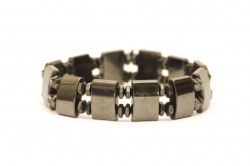
Rheumatoid arthritis is a painful, debilitating condition that affects up to 1% of the world’s population. With no known cure, only the symptoms are treated and, with the condition being known since antiquity, many alternative therapies are touted to relieve the suffering of those affected. Recent news articles have focused on two of these – magnetic bracelets and copper bracelets – reporting them to be “useless”, so here we look at the research behind these articles.

What did the researchers say?
Fruits and fruit juices have long been associated with healthier living. ‘An apple a day keeps the doctor away’ is a classic refrain, and it is true that the vitamins and fibre in fruits are beneficial to humans, and have been shown to reduce the risk of contracting some chronic diseases.
However, the evidence surrounding fruit’s ability to reduce the risk of type 2 diabetes is not particularly clear. The researchers note that previous studies may not agree with each other because of differences in the groups of people asked to take part, not to mention the nutritional properties of the different fruits used.
Isao Muraki, Fumiaki Imamura, Jo Ann E Manson, Frank B Hu, Walter C Willett, Rob M van Dam, Qi Sun (2013). Fruit consumption and risk of type 2 diabetes: results from three prospective longitudinal cohort studies. British Journal of Medicine, 347, doi: 10.1136/bmj.f5001

Earlier this week, Christine Caldwell wrote about the lack of scientific evidence behind a Daily Mail story about killer cats, warning readers to be particularly skeptical of scientific claims in news articles that fail to link to primary sources. It may just be a coincidence, but one of the most popular articles at the Mail Online this past week, titled “Meet the world’s Mrs Averages: Scientists blend thousands of faces together to reveal what the typical woman’s face looks like in 41 different countries from around the globe“, also had no basis in actual science, amounting to little more than a game of broken telephone.

Academics can get quite tiresome on the topic of primary sources. My students must get bored of me telling them to use, and accurately reference, primary scientific literature. But there are important reasons for doing this. As Ben Goldacre has said, linking to primary sources “shows your working, and it allows people to check whether what you wrote was true”. But journalists don’t always do this, which can make it very difficult to evaluate the evidence for supposedly scientific claims reported in the media.
I came across an example of this recently, with a science news story that was of interest to me both professionally and personally. The Daily Mail published an article (9 September 2013) with the alarming headline: “How we turned ‘tame’ cats into killing machines: Scientist claims neutering pets means felines only evolve in the wild where hunting skills are key to survival”. As a psychologist with a particular interest in animal behaviour and evolution this was intriguing, and as a lifelong cat-owner, I was even more compelled to find out more.


 researchtheheadlines.org