
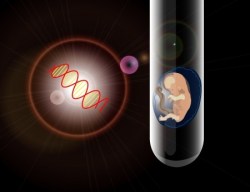
A recently published study that has reported a link between fertility problems and children’s mental health issues has attracted significant media attention. The story has been covered by the Guardian, the Telegraph, the Independent, the Scotsman, the Times, and countless health websites e.g. Nursing Times. Reporting of the study ranged from excellent such as the Guardian coverage to what could be considered not so good! So what’s this study all about? Read more…

It was recently reported that scientists observed menopause in a 49-year-old female orangutan, calling into question the assumption that humans are the only apes to undergo a natural end to female fertility. Gina, a wild-caught orangutan who has lived at the Durrell Wildlife Park in Jersey for the past 46 years, where she has given birth to 7 offspring, was being examined by vets in preparation for breeding when they discovered the physiological signs of menopause. Read more…
HT04: Does the media article link to the where the work is published and the original research team?
Welcome to part four of our How to “Research the Headlines” guide. By now, you should be familiar with some of our tips on how to address media reporting of research: make sure you read the whole article, not just potentially misleading headlines, and look out for quotes from and guidance from not only the authors of the research, but also some independent experts. Our next piece of advice regards the provenance of the research — does the news item provide links to the original study and those who carried it out?

Here at Research the Headlines we have written regularly about the use of inaccurate sensationalist headlines to attract the readers attention regardless of its validity. Well a headline has come out in the press that is so sensationalist I am left wondering if the author has made a huge misinterpretation or were indeed striving to be sensationalist! Read more…

The media have paid significant attention to a study that was published recently which looked at the financial cost of autism spectrum disorders (ASD) in the U.S. and the U.K. Most of the media have lead with headlines referring to the high annual cost of ASD to the U.K. economy (£32 billion) and have compared this to the lower cost of cancer, heart conditions and strokes combined. So is this comparison fair? Read more…
So now we come to our third tip to help you to “Research the Headlines“.
Part 3: Are independent experts featured in the article?
Here at Research the Headlines, we often discuss how research findings may have been presented in a biased way by the media. This relationship goes both ways and, of course, researchers may play up or down particular findings for various reasons. As well as this, research findings may not always be placed in a broader context by the particular researcher who conducted the study or by the media. So an important issue we have consistently raised in Research the Headlines is whether independent experts featured in the article to help address this balance?

Recent press coverage suggests that the UK could be the first country to have three-parent babies. But what are they, and why go to the effort of making them? Read more…

The media has shown a lot of interest in a recently published study that examined levels of hormones in prenatal amniotic fluid, and related this to subsequent diagnoses of autism. In general, the media coverage has been fairly accurate in relation to describing the study methods and findings, and in quoting the researchers who published the study. The topic is a highly sensitive one, and highlights the importance of a carefully worded press release to ensure that the implications of a study are not stretched beyond the specific findings shown. The media do not seem to have over stretched the implications, which could have been of a highly controversial nature had they chosen to ignore the researchers carefully worded statements. Read more…

Most people who know me well would probably say that I’m deeply cynical. And to be honest, as an engineering professor who likes to think that he’s got most things sorted out (note: incorrectly in many cases), I’ve always worn the stereotypical cynic badge with a degree of self-satisfied pride. After all, to quote George Bernard Shaw, “the power of accurate observation is commonly called cynicism by those who have not got it”.
However, this self-satisfaction recently turned to discomfort on reading a headline suggesting that, “Cynics three times more likely to suffer from dementia”, along with the subtitle, “People who see the world around them in a negative light appear to be at increased risk of cognitive decline in later life”. This and similar headlines appeared widely last week, including in the Telegraph, the Washington Post, and BBC.com, and I was not happy to hear it! Read more…
Part 2: What did the researchers actually say?
In the first part of our How to “Research the Headlines” guide, we suggested delving beneath the headline to get a fuller picture of the research being reported. Assuming you’re now in the meat of the story, what are some of the things you should you look for? One simple thing is whether or not the people who conducted the research are quoted in the report. Were they given an opportunity to put the research findings into their own words? Read more…


 researchtheheadlines.org