

Last week, the Daily Mail heralded a major breakthrough in reversing the ageing process: “‘Fountain of youth’ pill could be available in just two years: Blend of 30 vitamins and minerals may reverse ageing of the brain”. That is quite the headline. It is explicit in its assertion: we are two years away from having access to a pill that will combat the ageing process. Let’s take a closer look then! Read more…

This article was co-authored by Sinead Rhodes and guest writer Susan Rasmussen
The month of May is exam time for pupils and students up and down the country, so it is no surprise that there will be media coverage of research that examines issues like exam stress around this time. In the last week we have seen quite extensive media coverage suggesting a link between exam stress and suicide in teenagers. What was the research about, and how did the media handle this very sensitive issue? Read more…

While we’re all familiar with the old “apple a day” adage, the Daily Mail recently asked us to consider “Could a curry a week PREVENT dementia?”. While it’s not the first time that spicy food has been promoted as having a possible role in protecting our thinking skills as we age, the headlines and the actual research were not entirely in agreement. The Telegraph offered a slightly more measured headline “Eating curry may help fight off dementia, new study suggests” adding those caveats of “may” and “study suggests” to keep us guessing, while The Spectator left no room for doubt, declaring “Sorry, a weekly curry won’t prevent dementia”. Given that these headlines were all drawn from the same research study, it wouldn’t be surprising if people were left unsure what to think (and eat). Read more…

The largest and most devastating earthquakes occur at subduction zones, where one tectonic plate is forced to descend into the mantle beneath an adjacent plate in order to accommodate convergence between them. If we inspect a list of the largest earthquakes ever recorded, it is the sudden release of accumulated strain energy from locked subduction zones which produced the top nine. This includes the magnitude 9.5 Chilean earthquake of 1960 (the largest earthquake ever recorded) and the recent magnitude 9.0 Tohoku earthquake of 2011, which resulted in a much larger proportion of fatalities from the ensuing tsunami than the earthquake itself. Read more…

Within the last week there has been considerable media coverage of a study which potentially suggests there may be a link between excessive folic acid use in pregnancy and autism. Folic acid supplementation has of course long been recommended for use in pregnancy in the prevention of spina bifida (a condition where the spine does not develop properly) and other birth defects. Headlines have included ‘too much supplements during pregnancy may raise autism risk’ and ‘excessive folate use by pregnant women can increase risk for autism in children, study says’. These headlines will be nothing short of alarming for every prospective parent who reads them. But what is the science behind these headlines? Read more…
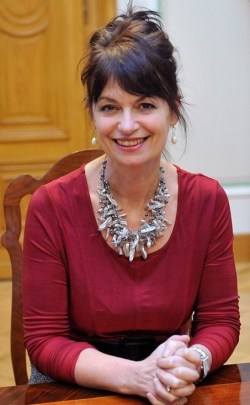
Professor Dame Anne Glover is Vice Principal for External Affairs and Dean for Europe at the University of Aberdeen. She served as Chief Scientific Adviser to the President of the European Commission (2012-2014) and as Chief Scientific Adviser for Scotland (2006-2012); this year Prof. Glover has been elected Fellow of the Royal Society, one of the highest recognition that can be awarded to scientists. Read more…

Recent headlines have been dominated by superheroes. The articles refer to a new scientific breakthrough that has identified “13 genetic superheroes” walking among us who can do nothing less than save the world as suggested by The Guardian. The Daily Mail also mentions in the title the “superhero” but allude to the main issue of the study adding a question “Are YOU a genetic ‘superhero’? Doctors discover 13 people who are resistant to severe inherited diseases – and there may be more”. Similarly The Independent talks about the Superheroes and further reveal we actually do not know who they are: “Genetic superheroes’ are real and could lead to life-saving treatments – but nobody can talk to them”. Read more…
On Monday (4 April), Sinead Rhodes (Co-Chair of Research the Headlines) will join colleagues from Sense About Science, the Nappy Science Gang and The Young Academy of Scotland to Ask for Evidence, part of the Edinburgh International Science Festival. Come along and hear about how research is reported, or misreported, in the media and what it might mean for you. Read more…

If you’re like me, you’ve probably succumbed to the pangs of longing for a dog, visited a dog shelter, and then decided that your working life and commute aren’t conducive to looking after one. There is some fantastic work going on in shelters, but finding homes for some breeds of dog isn’t easy.
Some new research is showing that one particular breed, the pit bull, is particularly benighted when it comes to adoption into a new home. The authors studied how people perceive shelter dogs of different breeds in a variety of circumstances. Read more…

Imagine you are a family grappling with the difficulties faced by having a child with Attention Deficit Hyperactivity Disorder (ADHD), a developmental disorder characterised by pervasive symptoms of inattention, hyperactivity, and impulsivity. But at least you have a diagnosis and people around you are sympathetic and assisting you with the range of help you need to deal with your child. Then you pick up a newspaper and read ‘ADHD is vastly overdiagnosed and many children are just immature, say scientists’. The ‘scientist’ reference makes this sound very credible, of course. Then you discover the story has hit every UK media outlet with other headlines, such as ‘ADHD children may just be immature, research suggests’ and ‘Is it really ADHD or just immaturity’. You are now battling not only with the challenges you meet with your child, but a society that questions the diagnosis and suggests your child is just immature……..what is behind these headlines?


 researchtheheadlines.org